Stone-look walls can make a restaurant, hotel lounge or retail space feel distinctive without using heavy natural stone. Polyurethane decorative panels are one option for creating that effect. For importers, however, the purchase decision involves much more than choosing a stone pattern: realistic texture, repeat designs, edge fit and installation method all affect the finished wall. This guide explains what to verify when working with a PU stone wall panel supplier in China.
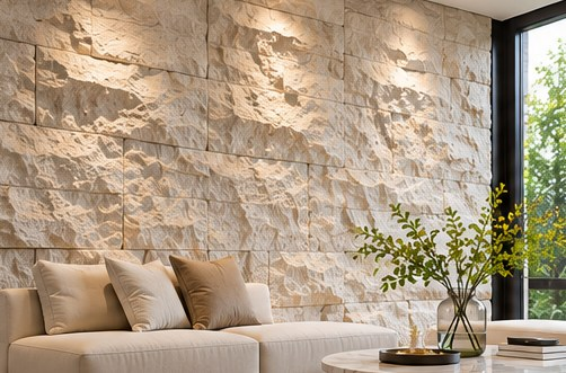
Illustrative design concept – confirm actual product finish with a physical sample.
Start with the intended environment
A textured feature wall in a dry indoor showroom has different requirements from a restaurant exterior or a humid commercial corridor. Ask whether the exact panel formulation and surface finish are intended for the proposed location. UV exposure, moisture, temperature changes and cleaning chemicals should all be considered. BOCAS presents PU stone options for a variety of decoration uses, but a product listing is not a substitute for a project-specific suitability review. Obtain relevant technical documents before committing to an outdoor application.
Look closely at the stone effect
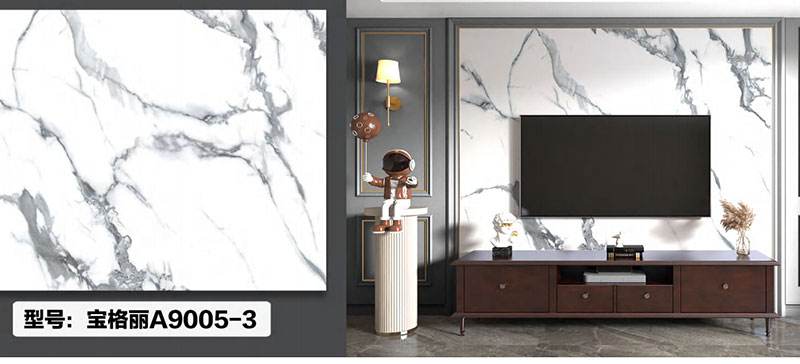
Attractive PU stone panels rely on variation in relief, shadows and surface tone. Ask for photographs taken in daylight and side lighting, plus a close-up of panel joints. Repeating patterns may become obvious across a large wall, especially if identical pieces are placed in a row. A good sample set should show multiple pieces from the same design so a buyer can evaluate pattern repetition and color variation. Discuss whether panels can be rotated or mixed without creating unnatural seams.
Check dimensions and manageable weight
One reason buyers consider faux stone is the ability to achieve a textured finish using relatively lightweight components. Still, size and weight vary by design. BOCAS lists PU wall panel formats on its product page; request the current drawing and actual weight of your selected item. Use the information to calculate pieces per square meter, pallet capacity and installation labor. Large panels might reduce the number of joints but require more careful handling and may increase shipping damage risk.
Choose the right fixing system
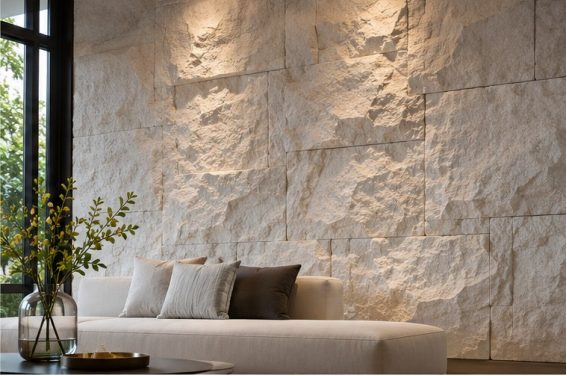
Installation usually depends on the wall substrate, panel geometry and the adhesive or mechanical fixing approved for that product. Do not assume one glue works on every painted, tiled or cement surface. Before bidding a project, ask for the recommended fixing materials, wall preparation steps, joint treatment and edge finishing method. Test a complete corner, not only a flat central section. Installers should also know how to cut the material around sockets and how the cut edges will be concealed.
Presenting a stone design to customers
Stone-look panels photograph differently in flat daylight and directional lighting. For your catalog, show one detail photograph, one complete installed wall and a photograph that makes the panel scale clear. Avoid using a dramatic rendering as proof of actual surface finish. A small sample display in your showroom can help customers understand whether the relief fits their design. This is particularly useful when selling several patterns with similar names.
Understand safety and performance claims
Words such as waterproof, fireproof and weatherproof are often used loosely in wall panel marketing. Ask exactly which test method, product version and application the supplier can document. A report for an unrelated formulation or substrate may not apply to the panel being purchased. For public buildings in Europe, check project specifications early, including the reaction-to-fire classification and declarations that may be required. Do not print ratings in your catalog until the supporting documents have been reviewed.
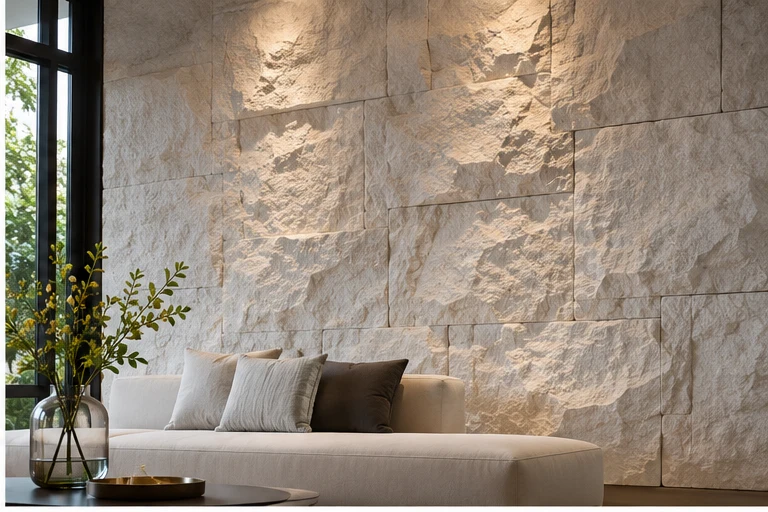
Illustrative interior or material reference; not a photograph of a BOCAS project.
Ask about matching accessories and offcuts
A large decorative stone wall usually needs clean endings at doors, ceilings and corners. Ask whether the selected panel has suitable corner pieces or whether cuts should be concealed with a compatible trim. Calculate the wall layout before agreeing the quantity: window returns and short sections can consume more pieces than a simple area estimate suggests. Keep a few spare panels from the same production batch because touch-up paint or replacement pieces ordered later may show slight shade variation. A contractor-friendly supplier should be able to explain these practical details.
Build a sensible bulk-order checklist
Compare quotations on a consistent basis: panel size, usable coverage, pattern mix, coating, packaging, FOB terms and damaged-piece allowance. Request pictures showing inner cushioning, carton arrangement and pallet protection. A buyer importing mixed designs should ask how colors and SKUs will be identified at the warehouse. For a first shipment, order a production sample or small test batch whenever practical. A successful wholesale program depends on repeatable texture and reliable replacement pieces, not only an eye-catching first display.
Frequently Asked Questions
Is PU stone the same as natural stone? No. It is a decorative polyurethane-based material designed to imitate stone textures.
Can PU wall panels be used outdoors? Some products may be suitable, but you must verify the exact formulation, finish and climate exposure with supporting documentation.
What is the most useful sample? Several adjacent panels from the same design, including corners or trim pieces when available.
Request Samples and a Quotation
For the next step, review BOCAS’s relevant product information at https://www.bocasrb.com/product/pu-wall-panel/ and send your intended application, preferred specifications and estimated order volume. Ask for current samples, documented performance information where required, and a quotation that clearly states what is included. A well-defined sample and a transparent specification remain the most reliable starting points for an international wall panel order.